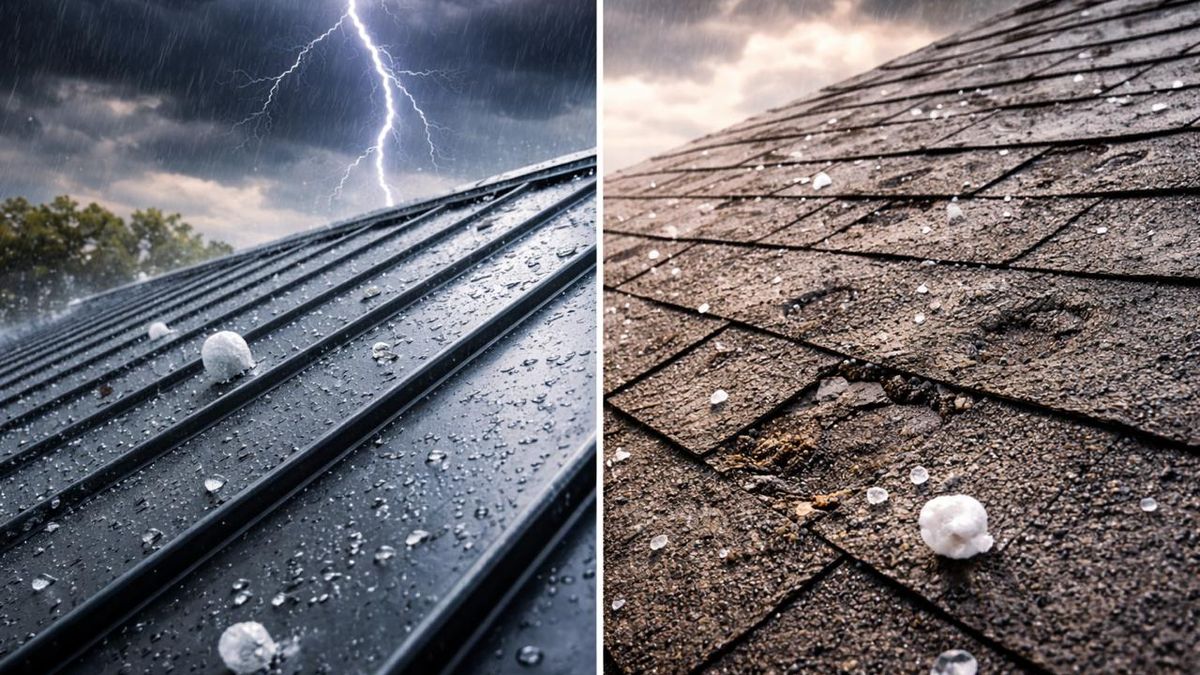
When it's time for a new roof in Dallas-Fort Worth, one of the biggest decisions you'll face is the choice between metal roofing and traditional asphalt shingles. Both are excellent options, but they perform very differently under the unique demands of the Texas climate. This comprehensive comparison will help you understand the pros, cons, and costs of each so you can make the right decision for your home and budget.
The Quick Comparison
| Factor | Asphalt Shingles | Metal Roofing |
|---|---|---|
| Cost (installed) | $4.50–$8/sq ft | $8–$16/sq ft |
| Lifespan | 20–30 years | 40–70 years |
| Hail Resistance | Moderate (Class 3–4) | High (Class 4) |
| Wind Resistance | Up to 130 mph | Up to 140+ mph |
| Energy Efficiency | Moderate | Excellent |
| Weight | 2–4 lbs/sq ft | 1–2 lbs/sq ft |
| Maintenance | Moderate | Low |
| Insurance Discount | Varies | Often 5–35% off |
Asphalt Shingles: The Popular Choice
Asphalt shingles remain the most popular roofing material in DFW — and for good reason. They offer a proven combination of performance, aesthetics, and affordability that's hard to beat.
Pros of Asphalt Shingles
- Lower upfront cost. For a typical 2,000 sq ft DFW home, a quality architectural shingle roof runs $9,000–$16,000 installed. That's roughly half the cost of metal roofing.
- Wide variety of styles and colors. Modern architectural shingles convincingly mimic the look of slate, wood shake, and tile. You'll find options to complement any home style.
- Easy to repair. Individual shingles can be replaced quickly and inexpensively. Any roofing contractor can work with shingles, making repairs convenient and affordable.
- Familiar to insurance adjusters. Insurance companies deal with shingle claims daily. The process is streamlined, and replacement costs are well-established.
- Impact-resistant options available. Class 4 impact-resistant shingles (like GAF Armor Shield II or Owens Corning Duration FLEX) can earn significant insurance discounts in Texas.
Cons of Asphalt Shingles in Texas
- Shorter lifespan. Texas heat and UV radiation break down asphalt faster than in cooler climates. Expect 20–25 years from architectural shingles in DFW rather than the 30 years advertised.
- Vulnerable to hail. Standard shingles can crack and lose granules from hail impact. Even without visible damage, hail reduces their effective lifespan.
- Higher heat absorption. Darker shingles absorb significant solar radiation, increasing attic temperatures and cooling costs during DFW's long, hot summers.
- More frequent replacement. Over a 50-year period, you'll likely need 2–3 shingle roofs versus one metal roof.
Metal Roofing: The Long-Term Investment
Metal roofing has surged in popularity across Texas in recent years, and the DFW market is no exception. Advances in materials, coatings, and installation techniques have made metal a compelling option for residential properties.
Pros of Metal Roofing in Texas
- Exceptional longevity. A properly installed standing seam metal roof lasts 40–70 years with minimal maintenance. Many come with 40–50 year manufacturer warranties. In DFW's climate, you'll likely never replace a metal roof.
- Superior hail resistance. Metal roofing achieves Class 4 impact resistance — the highest rating. While large hail may cause cosmetic denting, it rarely compromises the roof's structural integrity or waterproofing.
- Energy efficiency. Metal roofs reflect 25–40% more solar radiation than asphalt shingles. Cool-coated metal panels can reduce cooling costs by 10–25% — a significant savings during DFW's 5-month summer. Many metal roofs carry an ENERGY STAR rating.
- Wind performance. Standing seam metal panels can withstand winds up to 140–160 mph, making them ideal for severe Texas thunderstorms.
- Insurance discounts. Many Texas insurance companies offer premium discounts of 5–35% for metal roofing due to its superior wind and hail performance. Over the life of the roof, these savings can offset a significant portion of the higher upfront cost.
- Lightweight. Metal roofing weighs 1–2 lbs per square foot — significantly less than shingles. This puts less stress on your home's structure and in some cases allows installation over existing shingles.
- Environmentally friendly. Metal roofing is 25–95% recyclable at end of life, compared to shingles which typically end up in landfills.
Cons of Metal Roofing
- Higher upfront cost. For the same 2,000 sq ft DFW home, a standing seam metal roof runs $16,000–$32,000 installed. That's a significant initial investment, though the long-term cost often favors metal.
- Cosmetic denting from hail. While metal roofs rarely leak from hail, they can show dents — particularly in exposed fastener systems. Standing seam panels with thicker gauge steel (24 or 26 gauge) resist denting better.
- Noise. Metal roofs can be noisier during heavy rain and hailstorms. However, with proper underlayment and attic insulation — which any quality installation includes — the difference is minimal.
- Fewer qualified installers. Metal roofing requires specialized training and tools. Not every roofing company has the expertise, which means it's critical to choose a contractor experienced with metal systems.
- Expansion and contraction. Metal expands and contracts with temperature changes. Poor installation that doesn't account for thermal movement can lead to fastener loosening and potential leaks over time.
The Cost Breakdown for DFW Homeowners
Let's look at the real numbers for a typical 2,000 square foot DFW home over 50 years:
Asphalt Shingles (Architectural, Class 4)
- Initial installation: ~$12,000
- Second replacement (year 22–25): ~$15,000 (adjusted for inflation)
- Repairs and maintenance: ~$3,000 over 50 years
- Total 50-year cost: ~$30,000
Standing Seam Metal
- Initial installation: ~$24,000
- Maintenance over 50 years: ~$2,000
- Insurance savings (est. 15% discount): -$8,000 to -$12,000
- Energy savings (est. 15% cooling reduction): -$5,000 to -$8,000
- Total 50-year cost: ~$16,000–$22,000
When you factor in longevity, lower maintenance, insurance discounts, and energy savings, metal roofing often costs less over the long term despite its higher upfront price.
Which Is Right for Your DFW Home?
Choose asphalt shingles if:
- You're on a tight budget and need reliable protection now
- You plan to sell the home within 10–15 years
- Your HOA restricts roofing materials (though most allow shingles)
- You want the widest variety of aesthetic options
Choose metal roofing if:
- You plan to stay in your home long-term (10+ years)
- You want the lowest lifetime cost of ownership
- Maximum storm protection is a priority
- Energy efficiency and sustainability matter to you
- You're tired of replacing your roof every 20 years
Let Us Help You Decide
At Pro Roofing DFW, we install both premium asphalt shingle systems and standing seam metal roofing. We have no bias toward either material — our job is to help you choose what's best for your home, your budget, and your goals. We'll walk you through material samples, provide detailed estimates for both options, and answer every question you have.
Get Your Free Roofing Consultation
Frequently Asked Questions
Is metal roofing worth the cost in Texas?+
Metal roofing costs about twice as much as shingles upfront, but lasts 2-3 times longer and reduces cooling costs by 10-25%. For homeowners planning to stay long-term, the investment often pays for itself.
Which roofing material is better for Texas hail?+
Metal roofing with a Class 4 impact rating handles hail better than standard shingles. However, impact-resistant shingles (also Class 4) offer good hail protection at a lower price point.
Do metal roofs make homes hotter in Texas?+
No — metal roofs actually reflect more solar heat than shingles, keeping homes cooler and reducing AC costs by 10-25% in Texas summers.
What's the most popular roofing material in DFW?+
Asphalt shingles account for about 80% of residential roofs in DFW due to their affordability and ease of installation. However, metal roofing is growing in popularity, especially after major hail events.